
Singapore-first

When the heart stops, seconds decide who walks out.

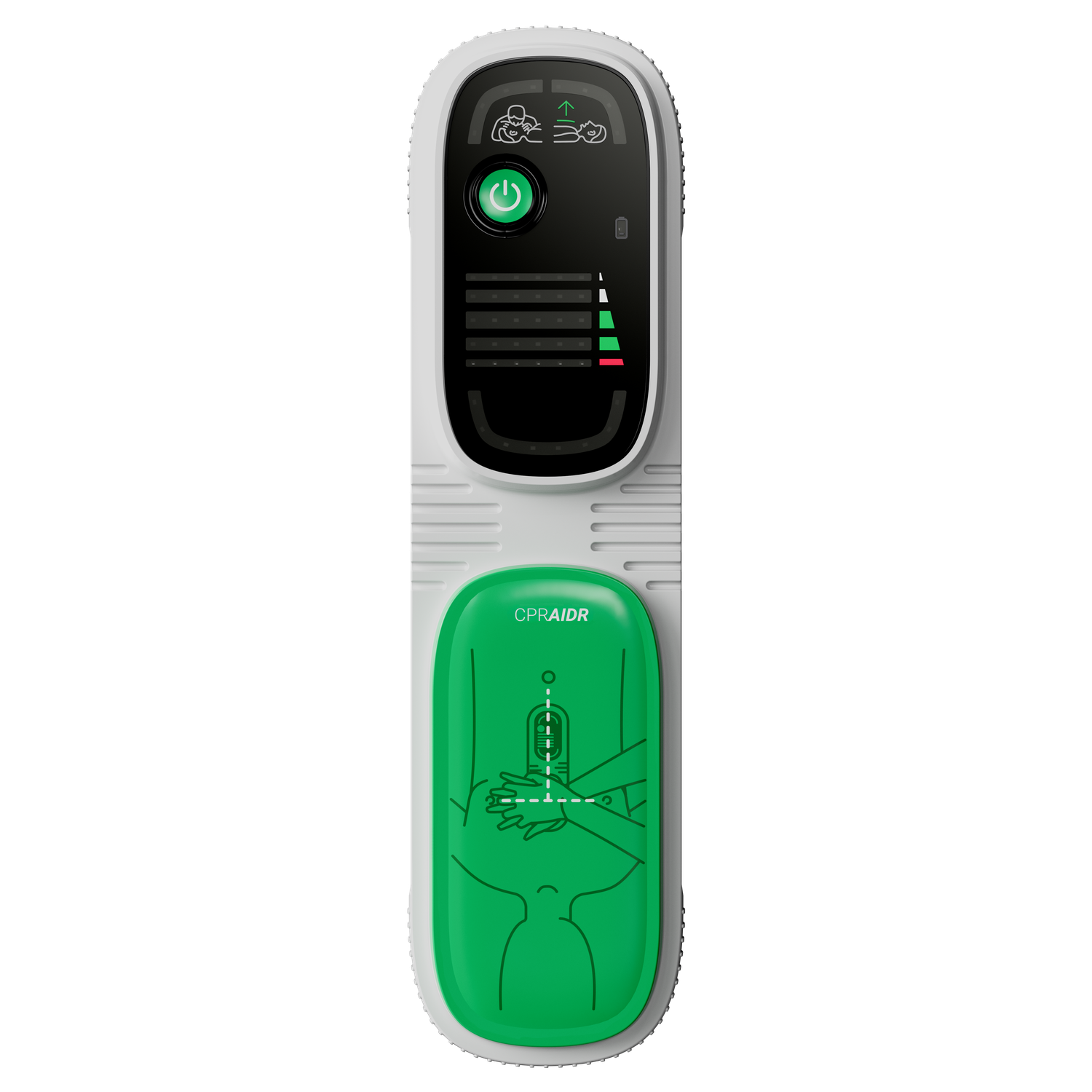
Most people freeze. Most CPR skills fade. Cardiac arrest does not wait for confidence. CPRAID brings CPRAIDR® — a dual-use CPR assistant for training and real emergencies — to facilities that refuse to leave survival to chance.

Reseller of VitalSigns Innovation AB (Sweden) Contact ewood@cpraid.com
Always wall-ready CPRAIDR CPR assistant device

The problem

Cardiac arrest is sudden. High-quality CPR is not automatic.

Outside hospital, survival still hinges on what bystanders do in the first minutes — before defibrillation and advanced care arrive.

2–3×

Immediate CPR can double or triple the chance of survival after cardiac arrest.

Context only (not a CPRAIDR® efficacy claim). Sources: American Heart Association (AHA) CPR Facts & Stats; European Resuscitation Council (ERC) Guidelines 2021, Systems saving lives.
~40%

Only about four in ten out-of-hospital cardiac arrest victims in the US receive bystander CPR.

Source: AHA public CPR / Heart Disease and Stroke Statistics messaging (~40.2%).

Minutes

Every delay to starting CPR costs survival odds. Skills also decay within months without practice.

Public chain-of-survival messaging (e.g. HLR-rådet — HLR (Swedish for CPR) — / resuscitation councils). Not a product outcome claim.

The operational gap: an automated external defibrillator (AED) on the wall is essential — but defibrillation often arrives after precious minutes of compressions should already have started. Facilities need both: early high-quality CPR and early defibrillation.

The product

CPRAIDR® — dual-use CPR assistant

Manufactured in Sweden by VitalSigns Innovation AB. Designed for two moments that matter: frequent short training, and the emergency when every compression counts. Pronunciation: “CPR-aider.”

What it does

A medical-device CPR assistant that provides real-time feedback to help users perform cardiopulmonary resuscitation with higher technique quality.

Compression depth

Feedback on how deep each chest compression is.

Rate / rhythm

Built-in metronome guidance to support guideline rate.

Full chest release

Feedback on releasing fully between compressions.

Ventilation guidance

Cues for breaths as part of the CPR sequence.

Source: VitalSigns frequently asked questions (FAQ) — vitalsigns.se/faq

Training Dual use

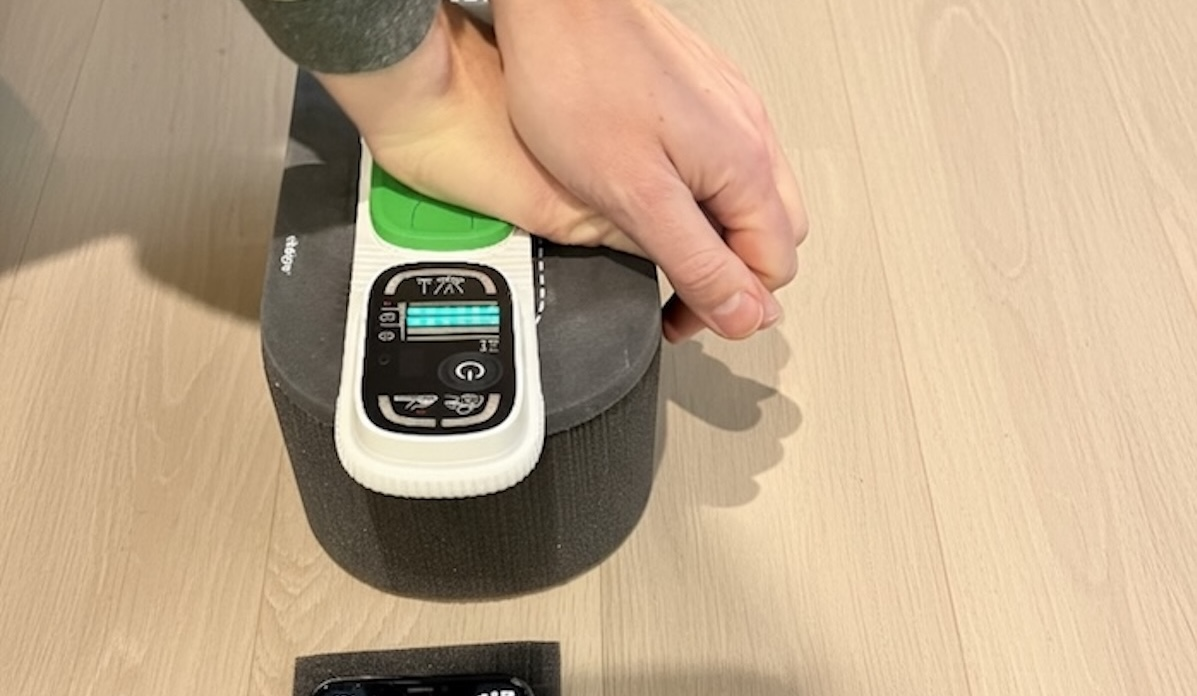
  • Short, frequent practice with companion app coaching
  • Compression Pad included — no manikin required for compression practice
  • Train at the workplace, not only on annual course day

Emergency Acute mode

  • Pull from wall mount, place on the chest, one-button activation
  • Audio and light guidance through the intervention
  • Intended for adult patients 18 years and older
CPRAIDR CPR assistant device
CPRAIDR used during CPR training
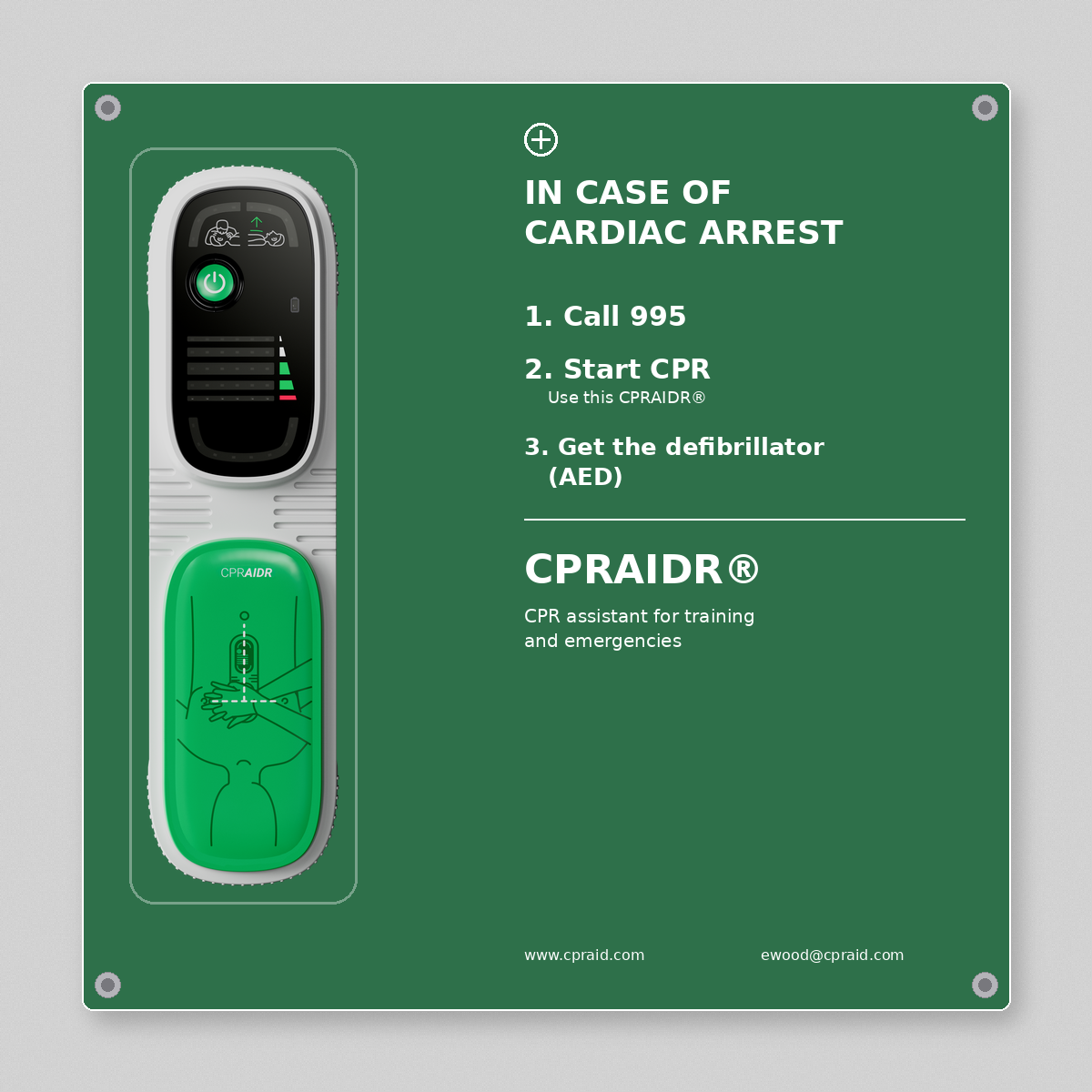
CPRAIDR wall-mounted with information plaque

Placement pitch: within a ~1-minute round-trip walk

Visibility and access beat locked cupboards. Position CPRAIDR® so staff can reach a device within about a one-minute round-trip walk throughout a facility — so CPR can start as soon as possible while someone retrieves the automated external defibrillator (AED) and calls emergency services.

Wall-mount package available for workplace visibility and quick grab. Source: VitalSigns product pages.

Wall-mounted CPRAIDR CPR assistant

Chain of survival

Automated external defibrillators (AEDs) and CPRAIDR® do different jobs. You need both.

CPRAIDR® is not a substitute for an AED. Guidelines emphasise early CPR and early defibrillation.

Defibrillation link

Automated external defibrillator (AED)

Analyses heart rhythm and delivers a shock if indicated. Critical when the rhythm is shockable — but devices are only useful if someone gets them to the patient in time.

Early CPR link

CPRAIDR®

Guides and gives feedback on manual chest compressions (depth, rate, release) plus ventilation cues — supporting high-quality CPR that buys time until defibrillation and advanced care.

VitalSigns states CPRAIDR® is a standalone device that can be used in parallel with defibrillators, does not affect defibrillator function, and need not be removed. Source: VitalSigns frequently asked questions (FAQ)

For facilities

Built for places where people gather — and where Health, Safety and Environment (HSE) owns the risk.

If your members, guests, or staff could collapse on site, readiness is an operations decision — not a once-a-year training slide.

Gyms & fitness clubs

High exertion, high footfall. Make CPR practice routine and emergency grab points obvious on the floor.

Food and beverage (F&B) & hospitality

Dense public spaces and shift teams. Wall-ready devices support response while waiting for emergency medical services (EMS).

Malls & retail

Large footprints need placement planning so help is never a long walk away.

Offices & campuses

Duty of care for employees and visitors. Pair automated external defibrillators (AEDs) with CPR readiness across floors.

Sports centres

Training venues and competitions — environments where cardiac events demand immediate action.

Multi-site operators

Standardise equipment and short refresh training across locations with Singapore-first support from CPRAID.

Ops / facilities

Visible mounts, known locations, ~1-minute access planning, maintenance-light battery-powered device.

Health, Safety and Environment (HSE) / risk

Complements AED programmes; supports early CPR readiness without claiming clinical outcome guarantees.

People / learning and development (L&D)

Short recurrent practice between formal courses — knowledge that decays without repetition.

Credibility

Swedish MedTech. Honest about evidence.

We only repeat what is publicly stated — and we keep the manufacturer’s own caveats intact.

VitalSigns Innovation AB

Swedish manufacturer based in Stockholm (Kräftriket 9A). Organisation number 559296-6989. Product: CPRAIDR® (CPR assistant).

Company states CPRAIDR® is CE-marked (Conformité Européenne) according to Medical Device Regulation (MDR) Class I and meets applicable EU medical device requirements.

Company-stated: CE · MDR Class I Adult patient use 18+ Stockholm, Sweden

Sources: vitalsigns.se footer & frequently asked questions (FAQ) (“Är CPRAIDR certifierad?”).

Studies — with the right qualifier

Stockholm University bachelor theses have studied the company’s sensor-based CPR aid (earlier referred to as “CPR Guide”; now branded CPRAIDR®), including work with laypeople and firefighters.

VitalSigns states these bachelor studies and surveys show improvements in CPR quality metrics and user confidence, but should not be interpreted as complete medical evidence. CPRAIDR® is intended as a training and support tool, not a medical treatment method. Clinical studies are planned.

Source: VitalSigns frequently asked questions (FAQ) — evidence · thesis summaries on vitalsigns.se/studier. This is not an official Stockholm University endorsement or partnership claim.

Named public customer cases (company case studies): KSM TIAB and Bodaborg (Karlskoga, Sweden) — cited briefly as published VitalSigns kundcase references only.

Contact

Request a facility briefing

Tell us about your sites in Singapore and beyond. We’ll follow up on placement planning, dual-use training, and how CPRAIDR® sits alongside your automated external defibrillators (AEDs).

Territory Singapore-first

Prefer email? The form opens your mail client with a pre-filled message. No data is stored on this static site.

Submits via mailto to ewood@cpraid.com. By contacting us you agree we may reply about CPRAID / CPRAIDR®.